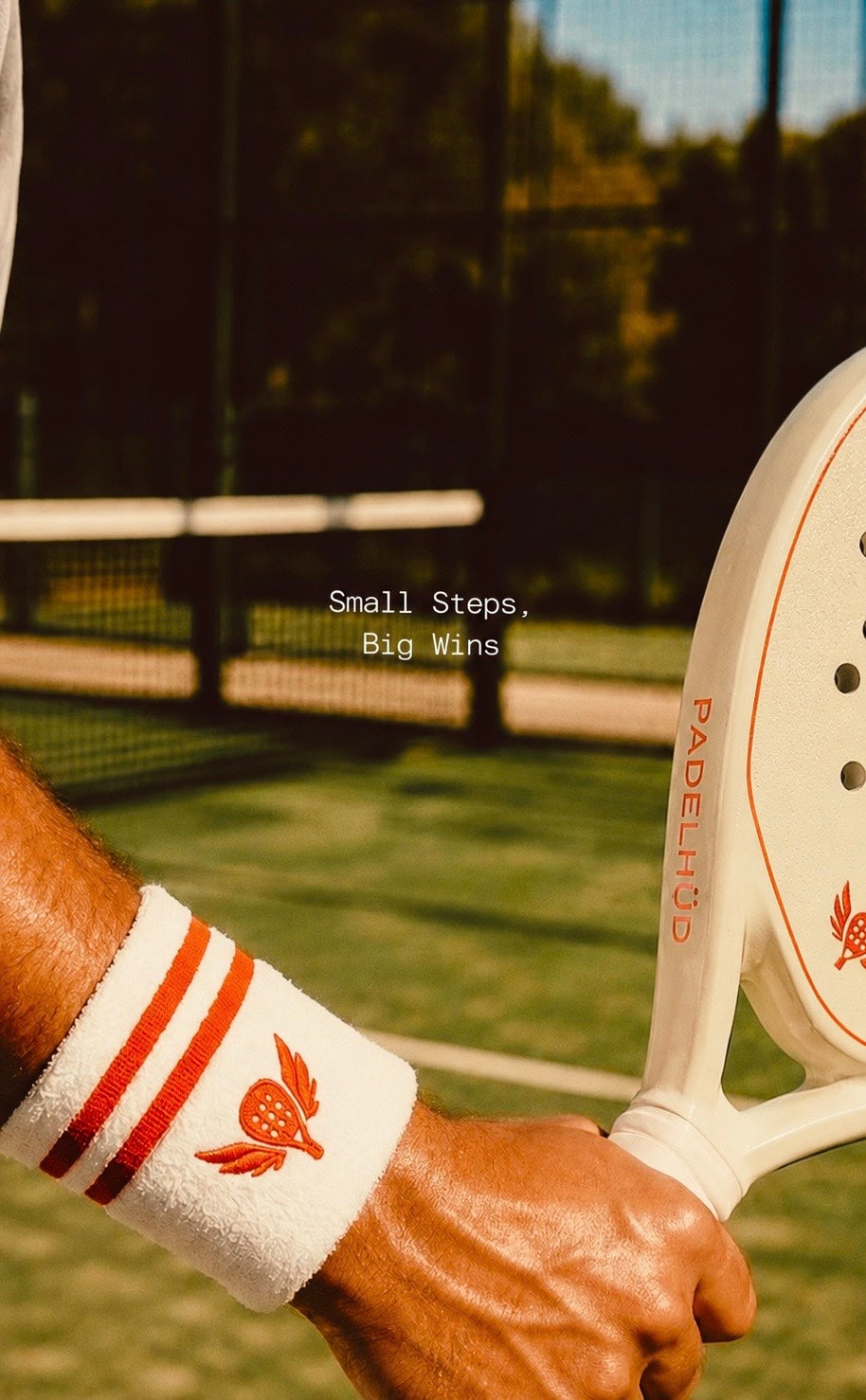
Why padel is the sport of this exact cultural moment
Why Padel Is the Sport of This Exact Cultural Moment
Every generation gets the sport it needs. Ours got padel. That is not a coincidence.
Sports do not become global phenomena by accident. They arrive when something in the culture is ready for them — when the particular thing they offer happens to be the particular thing a generation is quietly desperate for.
Yoga exploded in the nineties and early two thousands because an entire generation of high-achieving, over-scheduled people needed permission to slow down and go inward. Running boomed in the years after the financial crisis because people needed something controllable, measurable and solitary in a world that felt chaotic and unknowable. Cycling took over from running when people realised they wanted to cover more ground but still be alone with their thoughts and their data.
Every sport has its moment. Every moment has its sport.
Padel arrived at ours. And when you look at what the world looks like right now — what people are craving, what they are missing, what they are quietly searching for — it is almost impossible not to see why.
We are living through a loneliness crisis dressed up as a connectivity crisis. We have never been more technically in touch and never felt more practically isolated. The average person has hundreds of digital connections and genuine difficulty naming three people they could call at eleven on a Tuesday night if something went wrong.
This is the ambient texture of modern life, and it is exhausting in a way that is hard to articulate because it does not announce itself. It just sits there, underneath everything, a low hum of not-quite-enough that we have mostly learned to ignore.
Padel does not ignore it. Padel structurally, architecturally, unavoidably fixes it — for ninety minutes at a time, twice a week, one court at a time.
In a world where most activities have become increasingly solitary — the gym, the commute, the streaming service, the scroll — padel insists on the opposite. It insists on you being present, in a body, in a room, with other people who need you to be there. That insistence turns out to feel extraordinary.
But it is not just the loneliness. There are five things happening in the culture right now that padel is answering simultaneously, and the combination is what makes this moment feel different from a trend.
The exhaustion with optimisation
The quantified self had its moment. The decade of tracking sleep and macros and VO2 max and step counts produced a generation of people who were technically healthy and profoundly bored of thinking about their health. Padel asks nothing of you except to show up. There is no metric. There is no personal best. There is just the game, which is either going well or not going well, and either way you are laughing.
The hunger for real-world experience
We have spent years moving more of our lives online and discovering, with increasing urgency, that screens do not actually satisfy the human need for presence. The post-pandemic appetite for physical, embodied, shared experience has not gone away. If anything it has deepened. Padel is almost aggressively physical — you are hot, you are moving, you are breathing hard, you are high-fiving a real person with a real hand. That is not nothing. In 2025, that is almost radical.
The rejection of elite fitness culture
Something cracked in the relationship between women and fitness over the last decade. The language of transformation, of pushing through, of earning your body — it stopped landing. People started noticing that most fitness marketing was built on a foundation of inadequacy, and they started, slowly, to want something different. Padel is not about transformation. It is not about becoming. It is about the joy of movement right now, in this body, on this court, with these people. That reframe is not cosmetic. It is fundamental.
The need for low-stakes joy
Adult life has become relentlessly high-stakes. Work is high-stakes. Parenting is high-stakes. Money, relationships, health, the news — all of it carries weight. People are desperate for something that simply does not matter very much and is genuinely fun. Padel delivers this perfectly. A missed shot is immediately funny. A won point is disproportionately thrilling. The stakes are exactly low enough that you can be fully present without any of the anxiety that comes with things that actually count.
The aesthetic moment
We are living through a revival of court culture as a fashion and lifestyle reference point. Vintage tennis, quiet luxury, the effortless European sportswear aesthetic that has been building through fashion for several years — padel arrived at exactly the moment its visual language was already in the air. The glass courts. The relaxed silhouettes. The post-match coffee that is as much a part of the experience as the game. Padel does not just feel good. It looks right for right now.
The comparison that keeps coming up when people try to explain what padel is doing culturally is yoga in 1998. A practice that arrived from elsewhere, seemed niche and slightly inexplicable to people who had not tried it, and then within a decade had restructured an entire industry and a significant portion of how a generation thought about their bodies, their time and their social lives.
The scale is different. The speed is faster. But the underlying dynamic — a new physical practice meeting a cultural hunger that existing options were not satisfying — is the same.
- Competition and winning
- Individual performance metrics
- Physical transformation
- Discipline and sacrifice
- Exclusivity — the right body, the right level
- Exercise as obligation
- Connection and belonging
- Shared experience, not data
- Joy in this body right now
- Ease and laughter
- Radical inclusion — everyone belongs
- Movement as pleasure
The brands that will define padel's cultural ascent are not the ones selling equipment or performance technology. They are the ones who understand that padel is not primarily a sport. It is a social infrastructure. A way of organising community. A permission structure for adults to have fun, make friends, and prioritise something that has no productivity attached to it.
That is a genuinely different thing. And the cultural moment we are in — exhausted by optimisation, starved of real connection, hungry for joy that does not come with metrics attached — is ready for it in a way that does not come around very often.
Every generation gets the sport it needs.
We got padel.
We needed it more than we knew.
Not love some. Not love the ones who are already good.
Love all. That is the cultural argument in two words. Padelhüd · padelhud.com